
Ice Electronics Starter Kit: The Honest Minimum
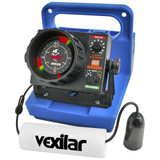
A starter electronics kit is not the cheapest sonar head you can find. It is the smallest complete chain that works when you get to the ice: a display, the right transducer, power you can recharge, and a pack that keeps those pieces together. Leave out one link and the low-priced head unit stops looking like a bargain.
Our Dockside comparison, Flasher vs. Camera vs. Sonar for Ice Fishing, answers the first question — which kind of device you want. This checklist answers the next one: what has to be in the kit before it counts as a kit?
The short version
The honest minimum is four things:
- One sonar device — a dedicated flasher or a digital sonar unit. Not both.
- One transducer made for ice — shaped and cabled to hang in the hole, with the connector your sonar unit needs.
- A battery and the correct charger — both accounted for, not assumed.
- A carry case or pack — one that holds the unit, battery, cables, and transducer as a single system.
Two complete ways to buy that minimum from our current catalog:
| Minimum build | What you buy | Product total |
|---|---|---|
| Digital sonar | Garmin STRIKER 4 Portable Bundle ($215.99) + Garmin Dual Beam-IF Ice Transducer ($82.99) | $298.98 |
| Flasher | Vexilar FL-8SE Genz Pack with 19° Ice-Ducer | $355.99 |
Totals are product prices before tax and any shipping. Garmin takes two products and adds GPS and a scrolling display; Vexilar is one assembled flasher pack. Neither needs a camera or live sonar to work.
First, pick one kind of sonar
Post #4 goes into the display differences in detail, but the starter-kit decision is simple:
- A flasher shows the cone under the hole in real time on a dial. No scrolling history and, on the Vexilar packs below, no GPS. It is one purpose-built ice system.
- A digital sonar draws the same basic returns as a scrolling picture with history. Many units also provide a flasher view and GPS. It can be the more flexible purchase if the same head unit will also be used away from the ice.
Do not buy one of each to start. A digital unit's flasher mode is still one sonar device, and a dedicated flasher is not an incomplete digital sonar. They are two ways to cover the same first job.
Our range is narrow here. The complete dedicated flashers we carry are Vexilar packs; we do not currently list a MarCum or Humminbird complete flasher pack. The digital route uses a Garmin portable bundle, not a Garmin ice-only pack — a distinction that matters at the transducer.
The checklist
□ 1. One sonar device
Start with the head unit or flasher itself. It has to be compatible with an ice transducer and with the battery system you plan to carry. A low price on a bare display is not a starter kit if the transducer, battery, charger, mount, and case are all separate purchases still to come.
A complete pack can avoid that trap, but check its box contents rather than trusting the word “bundle.”
□ 2. A transducer made for ice
An ice transducer is not just a boat transducer lowered through a hole. It is made to hang vertically and stay put, with a float or support and a cold-flexible cable. The connector also has to match the sonar unit.
Our two minimum builds show the difference:
- The Vexilar build includes its Ice-Ducer in the pack — a 19-degree model on the FL-8SE below.
- The Garmin STRIKER bundle includes a general dual-beam transducer, a float, and mounts for other uses. Garmin sells that portable bundle for ice as well as kayaks and canoes, so the included transducer is usable. Our minimum standard here is stricter: a purpose-built ice transducer. That is why the Garmin total includes the separate Dual Beam-IF rather than pretending the question does not exist.
Compatibility comes before beam angle, brand, or price. The Garmin unit uses a 4-pin transducer connection, and the Dual Beam-IF kit includes a 4-pin adapter cable, foam float, and grommet. Its silicone-coated cable is made to remain flexible in winter conditions.
□ 3. A battery and a charger
A battery by itself is only half of the power item. The minimum is a rechargeable battery, the maker-compatible charger for it, and the power cable that connects the system. If a listing names the battery but not the charger, count the charger as missing until the box contents prove otherwise.
Do not shop by an hours-of-runtime promise. Runtime changes with device, settings, display load, and temperature. Amp-hours compare capacity; they do not guarantee two different units will run for the same time.
Both minimum builds below include the battery and charger:
- Vexilar lists a 12-volt, 7-amp-hour battery with charger in the FL-8SE Genz Pack.
- Garmin's portable bundle lists a sealed rechargeable battery and an AC charger.
A second battery is not part of the starting minimum. It becomes a sensible spare after you know how long you stay out and how much power your unit actually uses. A lighter replacement battery is likewise a later upgrade, not a requirement for the first complete kit.
□ 4. A case or pack that works as a system
The pack protects the display, secures the battery, gives the transducer a place to sit, and keeps the cable contained.
The form can be different:
- Vexilar's Genz “Blue Box” is a rigid pack with a semi-enclosed battery compartment, a built-in transducer holder, cable storage, and a base made to fit on top of a five-gallon bucket.
- Garmin's portable kit uses a bag with a base and handle, battery storage, and built-in cable management.
A soft bag is not automatically worse than a hard pack, and a bucket by itself is not a substitute for either one. The test is whether the head unit, battery, transducer, and cables travel as one secure system.
□ 5. The small pieces that make it complete
Finally, account for the unglamorous parts: power cable, transducer cable, mount or support, and the float, float stop, or grommet used by an ice transducer. In the two builds below, those pieces are included in the named products. If you are assembling a kit around a used head unit or one you already own, list them separately. “I already have the display” can still leave three purchases between you and a working kit.
Use the same list to audit gear you own: a compatible fishfinder may need only the missing links, not a second display.
Build 1: digital sonar — $298.98
The Garmin STRIKER 4 Portable Bundle is $215.99. It includes the 3.5-inch CHIRP fishfinder with built-in GPS, a scrolling sonar display and flasher view, the portable bag and base/handle, a rechargeable battery with AC charger, power cable, and a general dual-beam transducer with float and mounting hardware.
Add the Garmin Dual Beam-IF Ice Transducer at $82.99. It operates at 77/200 kHz with 15- or 45-degree beamwidth, and the kit includes the 4-pin adapter cable, foam float, and grommet. The total is $298.98.
You will then have one general transducer you may not use on the ice. That is not wasted if it earns a place on a kayak, canoe, or boat, but it is part of the honest accounting: the low bundle price alone is not the price of our ice-specific minimum.
One more distinction is worth knowing. The Dual Beam-IF is a traditional dual-beam ice transducer, not Garmin's high-wide CHIRP ice model. If keeping a CHIRP ice transducer matters more than keeping the total down, Garmin's GT8HW-IF Ice Transducer is $121.99 instead of $82.99, for a build total of $337.98. That is a step-up choice, not the minimum used in the table.
Build 2: dedicated flasher — $355.99
The Vexilar FL-8SE Genz Pack with 19° Ice-Ducer is $355.99, and it is the simpler purchase: one product, already assembled, with the required pieces in one pack.
The listing includes the FL-8SE three-color flasher, the 19-degree Ice-Ducer, a 12-volt, 7-amp-hour battery, the charger, and the Genz Blue Box. The box provides the battery compartment, transducer holder, and cable storage; its base is made to fit on a five-gallon bucket.
You do not get GPS, a scrolling history, or a camera picture. Those are display differences from post #4, not missing parts.
If you want a step up inside the same complete-pack idea, the Vexilar FLX-12 Pro Pack II is $434.99 with a 12-degree Ice-Ducer and a 12-volt, 9-amp-hour SLA battery, plus the Pro Pack II's added holder and tackle-box features. It is a better-equipped pack, not a different definition of “minimum.”
What is not in the minimum
An underwater camera. A camera is a second way of looking, not a substitute for the sonar chain above. It does not provide the sonar transducer's depth column or show everything in the cone under the hole, and its view depends on light and water clarity. Post #4 covers when a camera makes sense. Buy one after the minimum if you want that separate picture — not instead of it.
Live sonar. Live sonar does do sonar work, and more: it can show a live view down or forward from the hole. It is outside the minimum because the purchase changes shape — a compatible display, a separate sonar module or system, a specialized transducer and pole arrangement, and a larger power setup. It is an upgrade path, not the honest starting point.
A second sonar, bigger screen, or premium transducer. Useful, sometimes. Necessary to make the first kit function, no.
GPS by itself. The Garmin build includes it, but a flasher without GPS is still complete; mapping does not replace a transducer, battery, charger, or case.
A lithium upgrade or spare battery on day one. Start with a working battery and its charger. Replace or add power after experience tells you whether weight or reserve capacity is your actual problem.
Non-electronics. These totals cover electronics only. An auger, rods and reels, jigs, a shelter, and a sled are separate gear decisions and are not hidden inside either build total.
Before you call it a kit
Run the box contents against this list:
- Exactly one primary sonar device is included.
- The transducer is an ice model, and its connector matches.
- The battery is included, and so is the correct charger.
- The mount, power cable, float or support, and transducer cable are accounted for.
- The case or pack holds the whole system securely.
- The total includes any transducer you had to add — not just the price of the head unit or first bundle.
That last check catches most “cheap” kits. If the listing says you still need to add a display, battery, or transducer, it may be a good component, but it is not yet a complete starter kit.
Start with the comparison if you are still choosing a display: Flasher vs. Camera vs. Sonar for Ice Fishing. Then browse the current lines here: Ice flashers & ice sonar systems · Fishfinders · Vexilar · Garmin
A note on prices and specs: Prices in this post are our store prices as of the date above and can change without notice — the linked product page always shows the current price. We check specifications and compatibility against the manufacturer's information when we write each post, but manufacturers can change products without notice, so confirm the details on the product page before you order.