
Gunwale Tracks Explained: Lund, Tracker, and Alumacraft Factory Systems
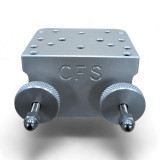
In Track Compatibility Explained, we covered the shared 3″ × ¼″ channel that most mounted track systems use — and gave factory gunwale tracks one short section at the end. This post is the long version of that section.
A factory gunwale track is not a piece of track bolted to your boat. It's an extrusion built into the gunwale at the factory, and Lund, Tracker, and Alumacraft each designed their own. None of the three is the 3″ channel, none of them takes channel accessories directly, and they don't interchange with each other either. What they do have is a full adapter ecosystem: Cisco and Traxstech — the two track brands we carry — both make mounts built for each factory system. This post goes system by system: what each factory track is, how the adapters attach to it, and what they cost.
The short version
- No direct fit: standard channel accessories do not slide into any of these three factory systems. Every setup starts with a mount or bracket made for that system.
- Two adapter styles: a mount that is itself the mounting platform (Cisco's approach), or brackets and clamps that carry a standard 3″ channel track above the gunwale (Traxstech's approach — and Cisco mounts can be bridged with track, too).
- Angle is the visible difference: Lund alone has two gunwale geometries in play — Cisco builds its Lund mounts at 42° and 90° — and Traxstech states plainly that its T-bolt brackets are "brand/model specific" and vary by boat.
- Names differ by maker: Lund says SportTrak; Cisco's mount for the same system says Sport Trac. Same system — search both spellings.
Why a factory track isn't channel track
The channel in post #3 is an add-on: a separate piece of extruded track, screwed down to a flat gunwale, standardized at 3″ wide × ¼″ high so accessories can mix across brands. A factory gunwale track skips that standard entirely. The boat maker profiles the extrusion as part of the gunwale itself, and the profile and gunwale angle vary by brand and model.
You can see the difference in how the adapters attach. Cisco's Lund mounts lock in with T-bolts or slotted keys inside the channel. Its Tracker mount bolts in through access holes in the sides of the gunwale. Its Alumacraft mount doesn't use the slot as a slot at all — it clamps over the top and underside of the gunwale. Three attachment methods means three different extrusion shapes. If the adapters can't agree on how to grab the rail, the rails aren't the same.
Who says so — the honest table
| System | The boat maker's own description | Standard channel gear, direct? | Who makes adapters |
|---|---|---|---|
| Lund SportTrak / Pro Trak | Lund: SportTrak "lets you mount a wide variety of accessories along the perimeter of your Lund" (Lund catalog) | No — needs a Lund-system mount | Cisco (42° and 90° mounts), Traxstech (T-bolt brackets) |
| Tracker VersaTrack | Tracker: "Exclusive VERSATRACK® accessory-mounting channel in gunnels" (Tracker, Pro Team 190) | No — needs a VersaTrack mount | Cisco (VersaTrack mount), Traxstech (TBM-90T brackets) |
| Alumacraft Alumatrac | Alumacraft: a mounting system along the gunnels; accessories attach and reposition in seconds (Alumacraft) | No — needs an Alumatrac mount or clamp | Cisco (standard and heavy-duty mounts), Traxstech (Alumatrac clamps — "only work in the Alumatrac gunwale system") |
Lund: SportTrak and Pro Trak
Lund uses two names, and both are Lund's own spellings: SportTrak and Pro Trak. Lund's catalog describes SportTrak as its exclusive system for mounting accessories "along the perimeter of your Lund, from rod holders and downrigger brackets to drink and tool holders," available on most Lund models. Pro Trak is the gunwale name on Lund's Pro-V-class boats — manufacturer feature lists for those models name a "ProTrak Gunwale." One caution: some current Lund listings name both systems on the same boat (a ProTrak gunwale and a SportTrak coaming), so "my Lund has a track" isn't specific enough to order against. Identify which extrusion you're mounting to.
Cisco's mount line is the practical map of the two systems. Note the spelling change: Cisco names its products "Sport Trac" and "Pro Trac" and builds them at two different angles, because the gunwales differ.
- The Cisco Sport Trac Lund Mount (42 degrees) ($72.95 in the standard configuration) locks into the SportTrak channel with custom stainless T-bolts — ¼-28 fine thread — and knurled knobs, no tools needed. A red line gauge shows when it's locked, two synthetic levelers protect the gunwale, and the 3″ × 4″ top takes a single rod holder or a cross-plate. The top is pre-drilled for Scotty, Folbe, and Cabela's hole patterns, with adapter plates available for Cannon, Scotty, Big Jon, and Walker downriggers.
- The Cisco Pro Trac Lund Mount (90°) (MTU90) ($72.95) does the same job for the Pro Trak gunwale, with stainless slotted keys instead of T-bolts and the same 3″ × 4″ top. Even inside one system, model matters: the Lund 202 Pro-V GL takes its own bow-mount variant at $97.95.
- For a downrigger, the Cisco Heavy Duty Pro Trak Lund Mount (Downrigger) (MTU90-DR) ($136.95 without an adapter plate) stretches the top to 8.5″ × 3″ specifically to spread torque across the gunwale and eliminate flexing on the Pro Trac.
- The small part worth knowing: Cisco Lund T-Bolt's (MTLND) are the ¼-28 replacement T-bolts for the Sport and Pro model Lund track systems — $18.95 for a set of two bolts, $32.95 with knobs and washers.
Traxstech's Lund route is different in kind: its T-bolt brackets bolt into the factory gunwale and carry a standard Traxstech track on top, so the boat ends up with a channel run instead of individual mounts. The brackets are sold by angle — 45°, 50°, 58°, and 90° — in pairs at $46.95 (silver) or $49.95 (black), one bracket per set of track mounting holes. Note that Traxstech's angles don't line up with Cisco's: the bracket nearest the Sport Trac mount's job is 45°, not 42°. For trees or downriggers on T-bolt brackets, Traxstech's own minimum is a 24″ track on four brackets.
Tracker: VersaTrack
Tracker keeps it to one system and one spelling of its own: the VERSATRACK® accessory-mounting channel, built into the gunnels. Where Lund's adapters work inside a channel, Tracker's geometry is different — the mounting hardware goes through the gunwale itself.
The Cisco Tracker VersaTrack Mount (MTTRK) is, in Cisco's words, "engineered exclusively to fit into any Tracker VersaTrack system." Two stainless carriage bolts slide into the access holes along the sides of the gunwale and can sit anywhere along the channels; knurled knobs tighten by hand, a spring washer keeps vibration from loosening them, and synthetic levelers keep the mount from marking the boat. The top accepts Cisco's cross-plates, track systems, rod holders, and electronics mounts, plus hole patterns for RAM, Scotty, Cabela's, and Folbe holders. The standard mount is $72.95; the Heavy Duty version is $136.95, and Cisco notes the heavy-duty mount needs a downrigger adapter plate for downrigger use.
Traxstech's Tracker answer is the TBM-90T — the 90° T-bolt bracket Traxstech builds its Tracker rod holders on (its GTLT-TBM-90T ratcheting holder is sold "for Tracker" on this bracket). Same pricing as the Lund brackets: $46.95 a pair in silver, $49.95 in black, with a standard Traxstech track on top.
Alumacraft: Alumatrac
Alumacraft's own site spells the system Alumatrac — no capital T in the middle — and describes it as a mounting system along the gunnels, made from heavy-duty machined aluminum, with accessories that attach and reposition in seconds. (Cisco's listings spell it "AlumaTrac"; Traxstech spells it "Alumatrac." Search both.) The adapter designs tell you the most about this extrusion: neither brand we carry slides a bolt into it the way they do on a Lund.
The Cisco Fishing Systems Alumacraft Mount (MTALM) ($72.95, standard) captures the underside and the top of the gunwale with its machined bracket — a clamp-over fit, no tools, quick to remove, and it keeps the gear mounted low. Cisco lists it for the Voyager, Escape, Competitor, Classic, and Trophy models. The top carries pre-drilled ¼-20 holes for Cisco's cross-plates and downrigger adapter plates, and Cisco, Scotty, Cabela's, and Folbe rod mounts mate with the included hole patterns.
The Cisco Heavy Duty Alumacraft Mount (MTALM-HD) ($136.95 before adapter plates) is the version Cisco designs specifically for vertical trees and downriggers. Two standard or heavy-duty Alumacraft mounts can also be bridged with a Cisco Sure-Stop track — at which point the direct mounts become the base for a short standard channel run, and channel accessories fit it.
Traxstech's Alumatrac Clamps for Alumacraft Boats (ACB-250) carry the clearest single-system statement in either brand's catalog: "These clamps will only work in the Alumatrac gunwale system." A Traxstech track mounts on the clamp's top plate; the clamps are sold two to a pack at $91.95 (silver) or $97.95 (black), one bracket per set of mounting holes. The same clamp also bolts directly to the bottom of a Traxstech rod holder once the holder's slide-in track plate is removed. And if your holders aren't Traxstech at all, the Traxstech Alumacraft Rod Holder Adapter (ACB-400 / BACB-400) ($77.95) exists to make other brands' holders — Scotty and Cabela's, per Traxstech — work on an Alumacraft.
Two ways to rig a factory-track boat
Everything above reduces to a choice we laid out in post #3, and it's worth making deliberately:
Mount directly. Cisco's system mounts are a platform in themselves — one holder, or a cross-plate of holders, per mount. Fewer parts, gear sits low, and each mount can be repositioned or removed by hand.
Put a track on top. Traxstech's brackets and clamps — or Cisco mounts bridged with Sure-Stop track — give the boat a standard 3″ channel run. It costs more up front, and after that, everything in post #3 applies: any channel accessory slides in, repositions, and mixes the way channel gear does. This is also where the ecosystem question from our Traxstech vs. Cisco comparison stops mattering — if you already own channel-mount gear from either brand, the bracket route keeps all of it in service on a factory-track boat.
Either way, heavy gear changes the answer. Both makers sell a specific heavy-duty answer for trees and downriggers on every one of these systems, rather than rating the standard mount for the job. Treat that as the manufacturers telling you where the standard mount's limit is.
Before you order, check five things
- Name your system exactly. Boat brand and system name — and on a Lund, SportTrak or Pro Trak, remembering some boats carry both names for different extrusions.
- Order by system, not by degrees. Cisco's Sport Trac angle is 42°; Traxstech's nearest bracket is 45°. Each maker's number is its own.
- Pick the route first. Direct mount or track-on-brackets decides which holders you can use afterward.
- Match heavy gear to heavy-duty hardware. Trees and downriggers get the HD mounts, the elongated footprints, or Traxstech's bracket minimums — not a standard mount that merely fits.
- Check the model list. Cisco's Alumacraft mount names five models; its Pro Trac line has a separate variant for the 202 Pro-V GL bow. "Fits Lund" or "fits Alumacraft" is not a complete spec.
The bottom line
Lund SportTrak and Pro Trak, Tracker VersaTrack, and Alumacraft Alumatrac are three separate factory extrusions — not three brands of one track, and not the 3″ × ¼″ channel from post #3. None of them accepts channel gear directly, and that's the only bad news. Each system has purpose-built mounts from both brands we carry, in direct-mount and track-carrying forms — and once the right adapter is on the gunwale, the factory track becomes what the boat makers built it to be: a place to put gear anywhere along the boat, without drilling a hole.
Browse the adapters here: Cisco · Traxstech · All rod holders
A note on prices and specs: Prices in this post are our store prices as of the date above and can change without notice — the linked product page always shows the current price. We check specifications and compatibility against the manufacturer's information when we write each post, but manufacturers can change products without notice, so confirm the details on the product page before you order.