
Braid vs. Mono for Trolling: The Gear Math
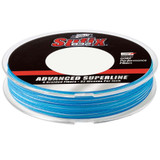
Braid or mono is usually argued as a preference. It is really a set of numbers: diameter, capacity, stretch, grip, and cost per yard. Those numbers are printed on the spool or published by the maker, and they decide most of the argument before opinion gets a vote.
This post works through the math using line we actually stock in Lines & Leaders. No fishing instruction — just what the specs mean when you are choosing line for a trolling setup.
The short version
- Diameter is the master number. At the same labeled test, braid is far thinner than mono. That one fact drives capacity, visibility, and release grip.
- Capacity scales with diameter squared. A small diameter difference is a big capacity difference — the worked example below puts 10 lb braid at roughly half the spool volume of 10 lb mono, yard for yard.
- Stretch is the behavioral split. Mono stretches noticeably; braid barely stretches at all. Neither is "better" in the abstract — they load your drag, rods, and releases differently.
- Releases care about line type. Pinch pads grip diameter and surface, not the test printed on the spool. Pick line before releases.
- Mono is cheaper per yard by a wide margin. Braid costs roughly 3–4× more per yard in filler spools, and its case rests on lasting multiple seasons. Mono's case rests on being cheap enough to replace without thinking about it.
Diameter first: the worked example
Compare two 10 lb lines we sell, using the makers' published diameters:
| Line | Labeled test | Published diameter | Spool | Our price | Cost per yard |
|---|---|---|---|---|---|
| Sufix 832 Advanced Superline (braid) | 10 lb | 0.008″ (0.20 mm) | 150 yds | $14.99 | ≈10.0¢ |
| Berkley x9 Braid Crystal (braid) | 10 lb | 0.12 mm | 164 yds | $15.99 | ≈9.8¢ |
| Berkley Trilene XL (mono) | 10 lb | 0.011″ (0.27 mm) | 300 yds | $7.99 | ≈2.7¢ |
Sufix publishes the 832's 10 lb diameter as the equivalent of 4 lb mono. Berkley's x9 chart is thinner still on paper. Test ratings are not measured identically across brands, so diameter — a physical measurement — is the number worth comparing.
Now the capacity math. The volume a line takes up on a spool scales with the square of its diameter. Trilene XL at 0.011″ against Sufix 832 at 0.008″:
(0.011 ÷ 0.008)² ≈ 1.9
So a spool volume that holds 300 yards of 10 lb Trilene XL would hold roughly 570 yards of 10 lb Sufix 832, before real-world packing, backing, and how evenly line lays on the spool take their cut. Treat that as geometry, not a reel rating — but the direction is not close. The mono takes up about twice the room per yard.
The same math lets you step up in strength instead of capacity. Sufix 832 in 20 lb is published at 0.009″ — still thinner than 10 lb Trilene XL. Double the labeled strength, in less spool volume than the lighter mono. That trade — capacity or strength, pick one — is braid's core offer.
One downstream effect worth knowing: line-counter reels turn spool rotations into feet based on how full the spool is. Change the line diameter and the fill level, and a counter that read true on mono can read off on braid until it is recalibrated for the new fill.
Stretch: the one real behavioral difference
Mono is a single strand of nylon or copolymer, and it elongates under load. Berkley's own line guide puts it plainly: mono has significantly more stretch than braid. Braid is woven polyethylene fiber, and it barely elongates at all — Sufix's material on the 832 describes it as a line that does not stretch, with mono's stretch creating a slight delay before force arrives at the far end.
Two consequences follow from that, and both are gear consequences:
- Total stretch scales with line out. Whatever a mono's stretch percentage is, twice as much line out means twice as many inches of give in the system. On a trolling setup, where long lengths of line are normal, the effect is larger than the percentage sounds.
- Something else has to absorb the shock on braid. With near-zero stretch in the line itself, sudden loads land on the rod, the drag, and the release. With mono, the line is part of the cushion. That is not an argument for either one — it is a reminder that switching line types changes how the rest of the setup should be sized and set.
We are not printing a stretch percentage for either line. Makers publish diameters precisely; they do not publish a standard stretch number for these products, and the figures quoted around the internet are not measured the same way. The honest version is the qualitative one above: mono stretches a lot more, braid stretches very little, and the gap grows with line out.
Abrasion resistance: construction, not a slogan
Both camps claim this one, and both claims need unpacking.
Sufix builds the 832 from eight fibers — seven HMPE plus one GORE Performance Fiber — and says the GORE fiber improves abrasion resistance. Berkley says the x9's nine-carrier construction enhances wear resistance. Sufix makes the same kind of claim for its mono: Superior is described as incredibly tough and abrasion resistant, with controlled stretch.
What the geometry adds: a nick of a given depth removes a bigger share of a thin line than a thick one. A scratch that costs a 0.008″ braid an eighth of its diameter costs a 0.011″ mono about a twelfth of its. And the failure styles differ — braid is multiple fibers, so damage shows up as fraying you can see and feel; mono is one solid strand, so damage is a weak spot in an otherwise intact-looking line.
The practical reading: abrasion resistance is not a single published number for any of these lines, and brand claims do not settle it. Diameter-for-diameter, construction matters. Test-for-test, mono carries more material to sacrifice. Inspect either one by running it through your fingers; replace what feels rough, nicked, or frayed.
Visibility: profile vs. translucency
Visibility has two separate components, and each line type wins one of them.
- Profile: braid is thinner at the same test, so there is physically less line to see. That is the diameter math again.
- Contrast: braid is opaque — a solid strand of color. Mono is translucent; clear mono like Trilene XL is made to let light through rather than block it.
Color is the lever you actually control. Our braid range includes low-visibility greens, Crystal, camo, and hi-vis options — hi-vis exists for the person holding the rod, not for subtlety at the lure end. Our mono example runs the same split: clear Trilene XL at one end, and Sufix Superior Neon Fire at the other, a bulk spool in a color chosen to be seen from the boat. Neither line type is "invisible." The choice is thin-and-opaque against thicker-and-translucent, in the color you pick.
Release grip: where this stops being abstract
On a trolling setup, line choice reaches the hardware. A pinch-pad release grips the line's diameter and surface. It does not know what test is printed on your spool.
That is why the diameter gap matters here. A release adjusted around 0.011″ mono is being asked to hold a 0.008″ — or thinner — braid with the same pads. Less material in the jaws, and a smooth, round braid surface, can mean less grip at the same setting. The fixes are gear choices, not technique: a release with real adjustment range, pads in good condition, and a line diameter the release was designed around.
Our two stocked examples show the adjustment mechanisms. Amish Outfitters' Clipper Planer Board Releases ($19.95) use a stainless adjusting screw you set once. Scotty's Power Grip Plus planer board release ($7.99) grips between soft pads, with tension changed by moving the line in or out of the jaws, and a tension adjuster that can double the holding power.
We covered where releases sit in the full system in the planer-board setup checklist — that post's advice stands: decide your line type before you buy releases, and check the release maker's stated line range against your line's diameter, not just its test.
Cost per spool, and the replacement math
Filler-spool prices, from the table above: braid runs about 9–10¢ a yard; Trilene XL runs about 2.7¢ a yard. Buying the bigger braid spool helps a little — Sufix 832 in 300 yards is $27.99 (≈9.3¢/yd) and Berkley x9 in 328 yards is $30.99 (≈9.4¢/yd) — but it does not close the gap. Per yard, mono is roughly a third to a quarter of braid's price.
Mono gets cheaper still in bulk. Sufix Superior Neon Fire in 10 lb is $10.99 for a 1,495-yard spool — about 0.7¢ a yard. The honest caveat: that is a bulk spool, enough to fill several reels, and our mono range currently skews toward bulk spools like it, while our braid range is mostly filler spools. Compare cost per yard, not the sticker.
Replacement interval is where braid earns some of that back — with a condition attached. No maker publishes a service life for these lines, so treat this as budgeting, not a spec:
- Mono: cheap enough to treat as an annual consumable. A 300-yard spool of Trilene XL is $7.99. Mono also ages in ways you can see and feel — memory coils, stiffness, nicks — and sunlight and water exposure work on nylon over time. At this price, fresh line at the start of a season is a small line item.
- Braid: the math only works if it stays on the reel. A $27.99 spool of 832 that remains serviceable for three seasons costs about $9.33 a season — in line with replacing mono yearly. The same spool replaced after one season costs $27.99 a season. The variable is inspection: frayed, fuzzy, or damaged braid has spent its advantage.
Either way, the decision rule is the same: replace on condition, and let mono's price make that decision easy and braid's price make inspection worth the minute it takes.
So which one, for a trolling setup?
By the numbers:
- Choose braid if spool capacity is your constraint, if you want more labeled strength in the same space, or if you want the line itself to add almost no stretch to the system — and your releases are built or adjusted to grip thin line.
- Choose mono if cost per yard and easy replacement matter most, if you want the line to provide some of the system's cushion, or if your releases are sized around mono diameters.
- Either way, compare diameters before tests, check release compatibility before you spool up, and price line by the yard and by the season — not by the sticker on the spool.
Browse both in Lines & Leaders — the braid range is deep (Sufix 832, Berkley x9, and more), the mono range is smaller and bulk-heavy, and every listing shows the current price.
A note on prices and specs: Prices in this post are our store prices as of the date above and can change without notice — the linked product page always shows the current price. We check specifications and compatibility against the manufacturer's information when we write each post, but manufacturers can change products without notice, so confirm the details on the product page before you order.